
Teach kids the phases of the moon and do a simple experiment to understand how the moon changes. Then find out the moon phase today.

Disclosure: As an Amazon Associate and member of other affiliate programs we earn from qualifying purchases. Read more.
Earth’s moon is our nearest neighbor in space. You can go outside most nights (and sometime during the day) to look up in the sky and find it.
Learning about the moon and its phases is a great introduction to space for kids. While the moon looks different from Earth every few days, kids will be excited to learn how the moon doesn’t change, just what we can see.

8 phases of the moon
The moon goes through 8 phases every month. According to NASA, the lunar cycle repeats about every 29.5 days. Time and Date has a video that illustrates the moon’s movement.
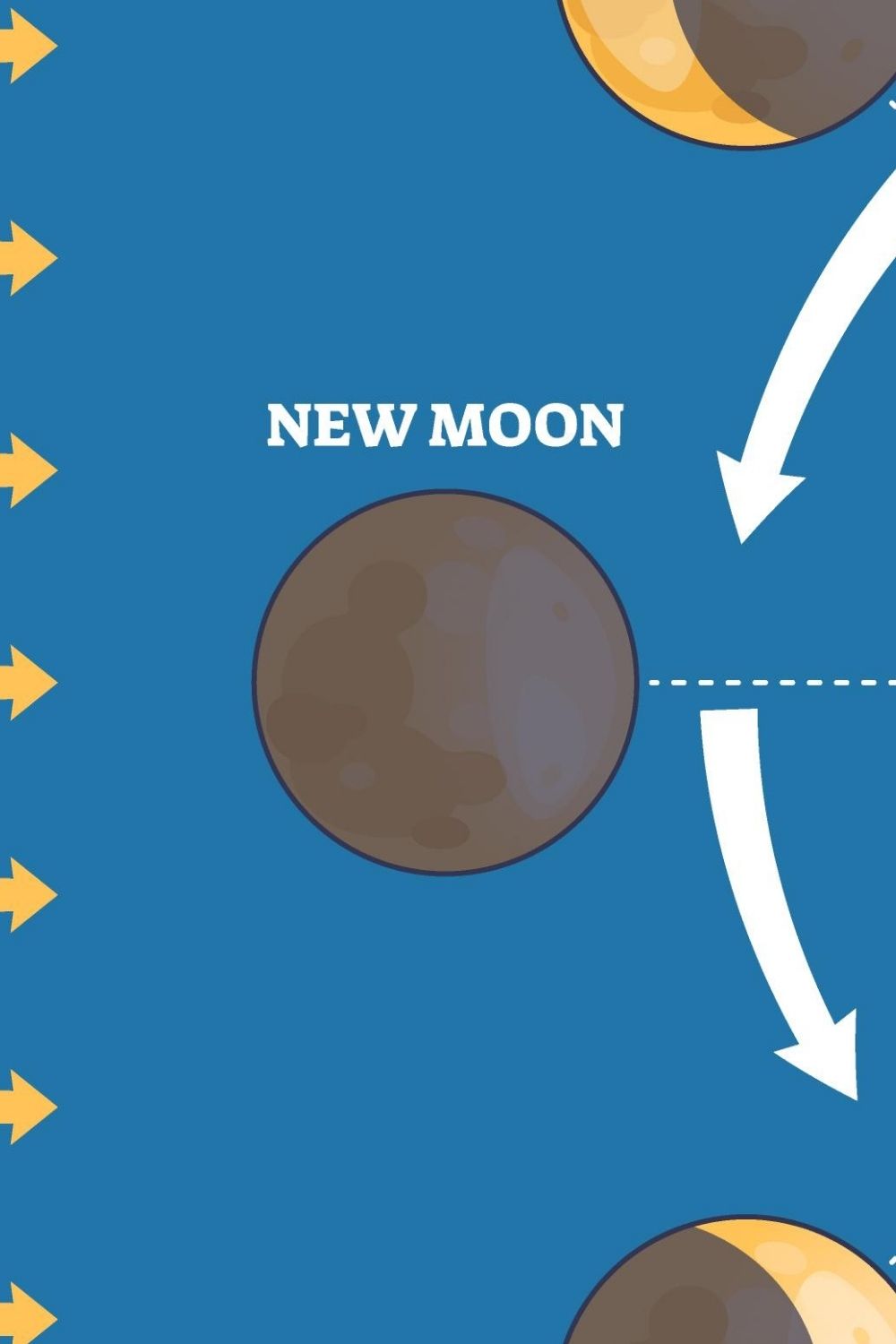
1. New Moon
- What does the moon look like from Earth: darkness
- Where can we see the moon: the moon is between the Earth and sun, so we cannot see it
If the sun, moon, and Earth align in exactly the right plane, there is a solar eclipse.
2. Waxing Crescent
Waxing means getting bigger
- What does the moon look like from Earth: a sliver less than half of the moon on the right side in the Northern Hemisphere or left side in the Southern Hemisphere
- Where can we see the moon: the moon is up during the first half of the day

3. First Quarter
- What does the moon look like from Earth: about half of the moon on the right side in the Northern Hemisphere or left side in the Southern Hemisphere
- Where can we see the moon: the moon is up during the second half of the day into night

4. Waxing Gibbous
- What does the moon look like from Earth: a slice more than half of the moon on the right side in the Northern Hemisphere or left side in the Southern Hemisphere
- Where can we see the moon: the moon is up late day into night

5. Full Moon
- What does the moon look like from Earth: a whole circle
- Where can we see the moon: the moon is up all night
If the sun, Earth, and moon align in exactly the right plane, there is a lunar eclipse.

6. Waning Gibbous
Waning means getting smaller
- What does the moon look like from Earth: a slice more than half of the moon on the left side in the Northern Hemisphere or right side in the Southern Hemisphere (opposite what you saw during waxing gibbous)
- Where can we see the moon: the moon is up at night into the morning

7. Third Quarter / Last Quarter
- What does the moon look like from Earth: about half of the moon on the left side in the Northern Hemisphere or right side in the Southern Hemisphere (opposite what you saw during first quarter)
- Where can we see the moon: the moon is up during the second half of the night into day

8. Waning Crescent
- What does the moon look like from Earth: a sliver less than half of the moon on the left side in the Northern Hemisphere or right side in the Southern Hemisphere (opposite what you saw during waxing crescent)
- Where can we see the moon: the moon is up during the first half of the day

Become a Happy Camper!
Sign up to receive our monthly email newsletter
and get a free printable 30 Day Reading Calendar!
Why the moon changes
Reflecting sunlight
The moon does not produce light itself. Instead, it reflects light from the sun. That means technically the moon isn’t changing, just the amount of light we see reflected to Earth.
Orbiting the Earth
The moon orbits Earth while Earth orbits the sun. One side of the moon always faces the Earth. As we move through space, sunlight hits different parts of the moon’s surface.
Moon phases experiment
Supplies
- lamp with the shade removed
- larger ball
- smaller ball
Instructions
1. Place the lamp on a flat surface that you can walk around, like a small table or the floor. Plug it in and turn it on to represent the sun.

2. Have one person hold the larger ball. It represents the Earth. Turn the Earth in your hands as you move around the sun. Notice how the sun shines on one side of the Earth as it turns, creating night and day.

3. Now, have another person hold the smaller ball. It represents the moon. Move the moon around the Earth. Notice how the amount of sun shining on it changes.

4. Finally, have both people work together to move the Earth and moon. Notice how the amount of sun shining on the moon looks different from Earth at different locations.

Find today’s moon phase
You can easily find today’s moon phase by visiting the Farmer’s Almanac online. Enter your zip code into the tool. It will give you a calendar of the phases of the moon for your location this month.
Plan your summer with the DIY Summer Camp Planner!
Our step-by-step guide will help you organize a day, a week, or a whole summer of fun activities for your kids.